



Cryptocurrency
In the longer term, of the 10 leading cryptocurrencies identified by the total value of coins in circulation in January 2018, only four (bitcoin, Ethereum, Cardano and Ripple (XRP)) were still in that position in early 2022 https://scudlayer.com/. The total value of all cryptocurrencies was $2 trillion at the end of 2021, but had halved nine months later. The Wall Street Journal has commented that the crypto sector has become “intertwined” with the rest of the capital markets and “sensitive to the same forces that drive tech stocks and other risk assets,” such as inflation forecasts.
Cryptocurrencies are legal in the European Union. Derivatives and other products that use cryptocurrencies must qualify as “financial instruments.” In June 2023, the European Commission’s Markets in Crypto-Assets (MiCA) regulation went into effect. This law sets safeguards and establishes rules for companies or vendors providing financial services using cryptocurrencies.
In June 2021, El Salvador became the first country to accept bitcoin as legal tender, after the Legislative Assembly had voted 62–22 to pass a bill submitted by President Nayib Bukele classifying the cryptocurrency as such.
Cryptocurrency bitcoin price
You will need a Bitcoin wallet and some BTC. The easiest way to get Bitcoins is to buy them on trustworthy platforms like the Crypto.com App. After setting up your wallet, you’ll likely want to connect it to your bank account or credit card so that you can buy and sell BTC. You’ll also need to do this if you want to convert BTC into dollars or other currencies.
In January 2024 the SEC approved 11 exchange traded funds to invest in Bitcoin. There were already a number of Bitcoin ETFs available in other countries, but this change allowed them to be available to retail investors in the United States. This opens the way for a much wider range of investors to be able to add some exposure to cryptocurrency in their portfolios.
The very first cryptocurrency was Bitcoin. Since it is open source, it is possible for other people to use the majority of the code, make a few changes and then launch their own separate currency. Many people have done exactly this. Some of these coins are very similar to Bitcoin, with just one or two amended features (such as Litecoin), while others are very different, with varying models of security, issuance and governance. However, they all share the same moniker — every coin issued after Bitcoin is considered to be an altcoin.
Hard forks are permanent changes that happen when a new version of Bitcoin splits from the original, creating two distinct chains that are entirely separate from each other. After splitting, these two chains no longer communicate.
To its users, traders, and holders (or hodlers!), Bitcoin is a type of electronic money that, unlike almost every previous alternative, exists independently and outside the control of any state or financial institution.
This is not strictly true, however, being that Bitcoins are stored on the blockchain and wallet addresses only identify them. But, to all intents and purposes, having a wallet and keeping its private key safe is similar to being in possession of and not losing a physical wallet containing cash.
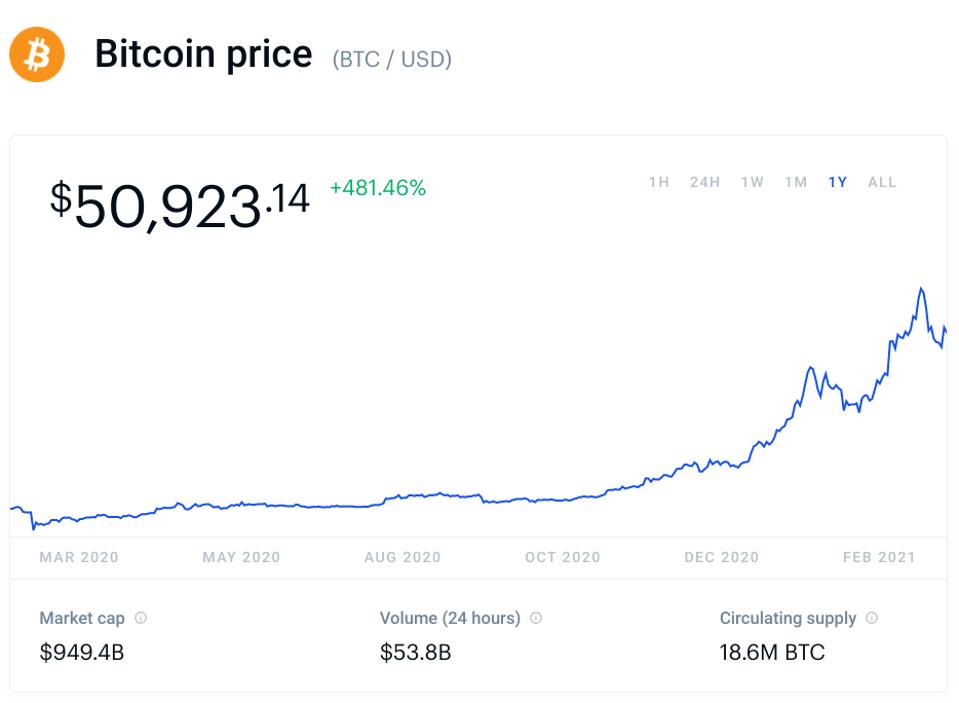
Cryptocurrency market
A cryptocurrency is a digital currency that keeps records about balances and transactions on a distributed ledger, which is most commonly in the form of a blockchain. Cryptocurrencies enable peer-to-peer transactions between participants across the globe on a 24/7 basis.
Crypto prices are calculated by averaging cryptocurrency exchange rates on different cryptocurrency trading platforms. This way, we can determine an average price that reflects cryptocurrency market conditions as accurately as possible.
In January 2024 the SEC approved 11 exchange traded funds to invest in Bitcoin. There were already a number of Bitcoin ETFs available in other countries, but this change allowed them to be available to retail investors in the United States. This opens the way for a much wider range of investors to be able to add some exposure to cryptocurrency in their portfolios.
We calculate a cryptocurrency’s market cap by taking the cryptocurrency’s price per unit and multiplying it with the cryptocurrency’s circulating supply. The formula is simple: Market Cap = Price * Circulating Supply. Circulating supply refers to the amount of units of a cryptocurrency that currently exist and can be transacted with.
The two major categories of cryptocurrencies are Proof-of-Work and Proof-of-Stake. Proof-of-Work coins use mining, while Proof-of-Stake coins use staking to achieve consensus about the state of the ledger.
